


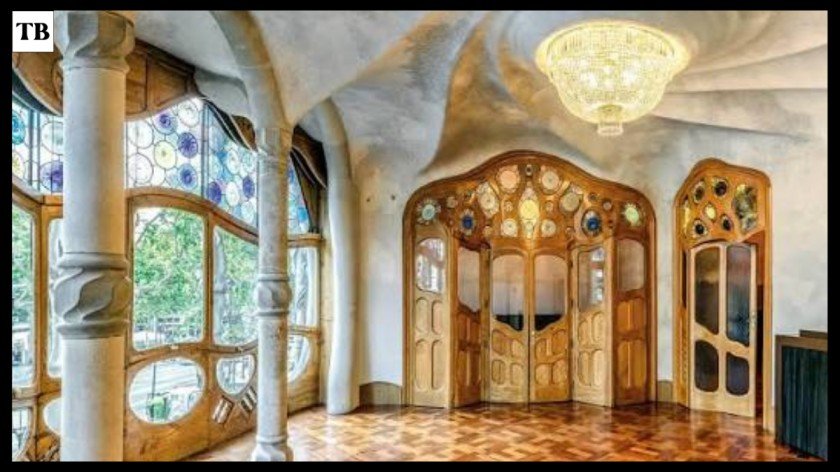
Art Nouveau is one of the most characteristic styles of architecture of the late nineteenth and twentieth century periods. The style is based on nature and makes use of curves, flowers, and other organic forms, iron decorations, stained glass, and craftsmanship to produce striking architecture. Art Nouveau became popular across Europe in cities like Brussels, Barcelona, Paris, Vienna, Glasgow and Riga. Important architects who contributed to the development of the style include Victor Horta, Antoni Gaudí and Hector Guimard. Today, these historic structures stand as important cultural heritage and provide inspiration for contemporary architecture, interior design and the decorative arts.
What Is Art Nouveau Architecture?
The movement developed during a time of major industrial and social change. European cities were growing, factories were expanding and new transport systems were changing daily life. However, many architects still relied on historical styles. Some designers felt that buildings should represent the modern age rather than repeat the past. Therefore, they searched for new forms that could combine modern construction with artistic creativity. This search helped establish a fresh design language based on nature, movement and craftsmanship.
Nature became one of the strongest influences. Architects and artists studied flowers, leaves, vines, trees and insects before turning them into stylised designs. Curved lines became especially popular and appeared around windows, doors, balconies, staircases and furniture. Japanese art also influenced many European designers because of its use of natural subjects, asymmetry and strong compositions. In addition, the Arts and Crafts movement encouraged greater respect for skilled handmade work. These influences helped create a style that valued both creativity and careful workmanship.
New construction materials gave architects even more freedom. Iron and steel allowed designers to experiment with structural and decorative forms. Glass provided new opportunities for natural light and colour. Rather than hiding these materials, architects often made them visible. An iron railing could become an artistic feature, while stained glass could change the atmosphere of an interior. Craftspeople also played an important role. Glassmakers, metalworkers, ceramicists, woodworkers and furniture makers helped turn architectural ideas into detailed finished spaces.
Art Nouveau Architecture Characteristics and Key Features
Flowing curves are among the easiest characteristics to recognise. Architects used curved lines in windows, doors, balconies, railings and staircases. The whiplash curve is a famous example because its shape can resemble a twisting plant stem. Natural forms also appear throughout many designs. Flowers, leaves, vines and insects became popular decorative subjects. Instead of copying nature exactly, designers transformed these forms into stylised patterns. As a result, buildings could feel connected to the natural world while maintaining a strong artistic identity.
Asymmetry provides another important feature. Traditional buildings often rely on balanced façades and repeated elements. By contrast, designers could arrange windows, doors and decorative features in less predictable ways. Materials added further character. Decorative ironwork could create detailed balconies and railings. Stained glass could introduce colour and changing patterns of light. Ceramics and mosaics could add texture to walls and floors. Carved wood could continue natural patterns across doors, furniture and interior surfaces.
Interior unity was equally important. Architects often planned the exterior and interior as parts of one visual idea. A staircase could repeat curves found in a doorway. Furniture could use botanical shapes that matched the windows. Lighting could support the same mood as the rest of the room. To achieve this effect, architects worked closely with specialist craftspeople. Their combined efforts created interiors that felt complete rather than randomly decorated. Consequently, the strongest examples demonstrate how structure, materials, furniture and decoration can work together.
Famous Art Nouveau Architecture Examples
Brussels remains one of the most important cities for studying the movement. Victor Horta designed several influential town houses there. Hôtel Tassel is particularly significant because it combines innovative planning, natural light, flowing forms and decorative ironwork. Horta gave the staircase a strong visual role rather than treating it as a simple practical feature. Hôtel Solvay offers another important example. Its furniture, lighting, materials and architectural details were carefully coordinated. These buildings show how residential architecture could become a complete artistic environment.
Barcelona developed a more expressive and sculptural interpretation. Antoni Gaudí created buildings with curved surfaces, colourful materials and unusual structural forms. Casa Batlló is one of his best-known works, with a striking façade, distinctive windows and flowing decorative details. Casa Milà, also known as La Pedrera, has an undulating stone exterior and a remarkable rooftop. Gaudí combined artistic imagination with structural experimentation. Lluís Domènech i Montaner also contributed to Catalan Modernisme. His buildings connected modern design with local culture, history and craftsmanship.
Other European cities provide equally valuable examples. Paris became closely associated with Hector Guimard, whose Métro entrances transformed public transport structures into memorable pieces of urban design. Vienna’s Secession Building, designed by Joseph Maria Olbrich, presents a more geometric interpretation. Glasgow became known for Charles Rennie Mackintosh and his carefully planned interiors. Riga contains a large collection of buildings from the same period. Visitors can also find notable examples in Nancy, Prague, Budapest and Ljubljana. Comparing these cities reveals how local culture shaped the movement.
Famous Architects and Their Influence
Victor Horta became one of the movement’s leading pioneers. His Brussels town houses introduced fresh ideas about space, light and movement through interiors. Staircases often became important visual features rather than hidden practical elements. Horta’s use of iron also showed that structural materials could have artistic value. He incorporated metal into railings, supports and decorative details. His approach connected structure, function and decoration in a new way. As a result, his buildings became important examples of innovative residential design.
Antoni Gaudí developed an extremely personal approach. He explored natural forms, geometry, Gothic influences and structural ideas. His buildings show how artistic concepts can influence the shape of an entire structure. Hector Guimard followed a different path in Paris. His Métro entrances demonstrated that public infrastructure could have a strong artistic identity. These projects remain relevant because modern cities still need transport stations and public spaces that are practical, attractive and easy to recognise.
Charles Rennie Mackintosh created a more restrained interpretation in Glasgow. His work combines geometric forms with stylised natural details. He also paid close attention to furniture, lighting and interior decoration. Joseph Maria Olbrich contributed to the Vienna Secession and developed a more geometric approach. Lluís Domènech i Montaner helped shape Catalan Modernisme, while Margaret Macdonald Mackintosh made important artistic contributions. Together, these figures show that the movement involved architects, artists and craftspeople working across several creative fields.
Art Nouveau vs Art Deco: Benefits, Pros and Cons, and Modern Uses
Art Nouveau and Art Deco are often confused because both styles use decorative features. However, they developed mainly during different periods. Art Nouveau became popular from the 1890s into the early 20th century. Art Deco became especially influential during the 1920s and 1930s. During this later period, cars, aeroplanes, cinema, skyscrapers and mass production influenced design. Consequently, Art Deco often celebrated technology, speed, luxury and modern industry.
The shapes provide the clearest difference. Art Nouveau favours flowing curves, organic forms, botanical motifs and asymmetry. In contrast, Art Deco usually uses straight lines, geometric patterns, symmetry and stepped forms. One style can make a building appear connected to nature, while the other often creates a stronger feeling of order and technological progress. Nevertheless, both movements valued decoration and visual identity. Glass, metal and other modern materials can appear in both. Therefore, the date and overall design should be considered when identifying a building.
Studying these styles offers several practical benefits. Architecture students can understand design history more clearly. Travellers can identify historic buildings more easily. Interior designers can adapt selected ideas for modern spaces. Homeowners can also introduce historical details without recreating an entire period interior. Useful ideas include:
- Flowing curves for furniture and architectural details.
- Botanical patterns for walls, fabrics and decorative surfaces.
- Stained glass for colour and natural light.
- Decorative metalwork for doors, balconies and staircases.
- Handcrafted ceramics and mosaics for texture.
- Organic lighting inspired by natural forms.
- Geometric details for a more structured modern look.
Is Art Nouveau Architecture Worth Studying?
Studying this movement is worthwhile because it represents an important stage in architectural history. It developed during a period when industrialisation was changing European cities. Architects began questioning the repeated use of historical styles and explored new materials, forms and construction methods. At the same time, they continued to value craftsmanship. This combination produced buildings that remain valuable to students, historians, designers and travellers. The movement also teaches an important lesson: practical architecture can still have artistic value.
Its international character makes the subject even more interesting. Brussels highlights Victor Horta’s innovative town houses. Barcelona reveals Antoni Gaudí’s imaginative buildings. Paris demonstrates how decorative design entered public transport. Vienna shows the development of the Secession style. Glasgow presents Mackintosh’s carefully controlled interiors. Riga contains many buildings from the same period. Comparing these cities helps explain how local culture influenced a wider European movement and why the style looks different from one country to another.
The movement also helps explain the transition towards Art Deco and later modern design. Organic curves gradually gave way to stronger geometry, symmetry and streamlined forms. However, interest in materials, craftsmanship and visual identity continued. Modern designers can still learn from these principles without copying historic buildings. Natural shapes, expressive materials, thoughtful lighting and integrated interiors remain useful today. For architecture enthusiasts, the subject offers both historical knowledge and practical design lessons.
Also Read. Portrait Artist of the Year Judges Winners Seasons 2026 Guide
Frequently Asked Questions
What Defines Art Nouveau Architecture?
It is known for flowing curves, natural forms, floral motifs and decorative craftsmanship.Buildings often combine architecture, interiors, glass, metalwork and furniture into one design.
Who Is Considered the Father of Art Nouveau?
Victor Horta is widely regarded as one of the leading pioneers of the movement.His Brussels town houses helped establish its distinctive architectural language.
What Is the Difference Between Art Deco and Art Nouveau?
Art Nouveau uses organic curves, natural motifs and often asymmetrical designs.Art Deco came later and is known for geometric shapes, symmetry and streamlined decoration.
What Are the Main Characteristics of Art Nouveau Design?
Key features include curved lines, botanical patterns, stained glass, ironwork and decorative details.The style also places strong emphasis on craftsmanship and integrated interior design.
Where Can You See Famous Art Nouveau Buildings?
Brussels, Barcelona, Paris, Vienna, Glasgow and Riga are important centres for the style.Each city offers distinctive examples influenced by local culture and individual architects.
Conclusion
However, Art Nouveau remains to be one of the most exciting movements in architecture in Europe’s history. Curves, natural shapes, decoration elements, stained glass and the excellent craftsmanship have made the buildings with their own characters. There are a lot of famous architects who have managed to put their own interpretation in this movement – Victor Horta, Antoni Gaudí, Hector Guimard, Charles Rennie Mackintosh. Knowing the difference between Art Nouveau and Art Deco, it is much easier to distinguish between them. It can be observed in historical buildings in Brussels, Barcelona, but also in Paris, Vienna, Glasgow, Riga and other places.