


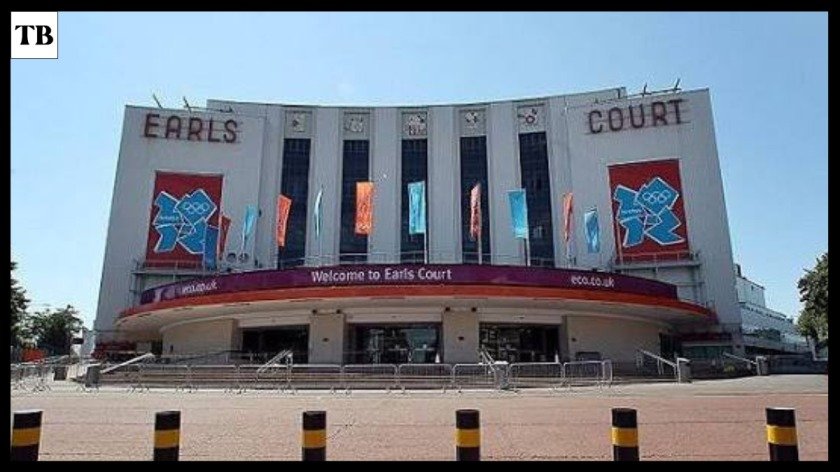
The Earls Court Exhibition Centre was once a much-loved landmark in west London, where people came to see exciting exhibitions, concerts, sporting events and major public shows. For generations, it was more than just a huge events venue; it became part of many people’s memories, from visiting a motor show with family to watching a favourite musician perform. The centre opened in 1937 and remained an important London destination for decades before closing in 2014 and being demolished. Today, the former site is changing dramatically as a major redevelopment takes shape. This article explores its history, famous events, demolition, redevelopment, capacity, location and future.
History of the Historic Exhibition Venue
The historic venue opened in 1937 and quickly became one of London’s most important exhibition spaces. American architect C. Howard Crane designed the building with huge halls and wide open floors. This design gave organisers plenty of freedom when planning different events. They could install exhibition stands, display vehicles, build temporary attractions or create large concert areas. The scale of the building made it particularly useful for events that needed large amounts of indoor space. Its distinctive design also helped it stand out among London’s older exhibition and entertainment venues.
Over the decades, the venue hosted a remarkable range of events. The British International Motor Show, London Boat Show, Ideal Home Show and Royal Smithfield Show were among its best-known exhibitions. Businesses used the halls to launch products and meet customers, while families and tourists attended public shows. The centre also became a major entertainment venue, with famous musicians performing there. David Bowie and Pink Floyd were among the well-known artists connected with the building. Sporting events added another chapter to its history, including events connected with the Olympic Games.
The venue’s location played an important role in its success. It stood in a well-connected part of west London, close to Underground and other public transport links. Visitors could reach major events without relying entirely on cars, while nearby hotels, restaurants and shops benefited from the large crowds. The centre therefore became closely linked with the surrounding neighbourhood. Its closure later created a major change for Earls Court, but memories of the building remain strong. Old photographs, programmes, tickets and event records continue to attract people who want to understand this important part of London’s past.
Earls Court Exhibition Centre Events, Tickets and Famous Shows
The history of earls court exhibition center events covers many different areas. Motor shows were among the most popular occasions, giving manufacturers a huge indoor space to display new vehicles. Visitors could compare different models, explore company displays and see new automotive technology. The large halls allowed manufacturers to build impressive temporary stands that created a strong visual impact. For businesses, these events offered valuable opportunities to meet potential customers and generate publicity. For visitors, they provided a chance to see products that they might otherwise only encounter through newspapers, magazines or television.
The London Boat Show showed the building’s remarkable flexibility. Organisers brought large boats into the exhibition halls, turning the interior into an unusual indoor marine display. Visitors could walk around the boats and explore equipment, services and other related products. Other exhibitions used the space for homes, technology, trade products and specialist industries. The building could change dramatically from one event to the next. This flexibility helped the centre remain useful for many years and allowed it to serve both public events and professional trade exhibitions.
Music fans also remember the venue for its concerts and entertainment shows. Famous performers appeared there, creating memorable experiences for large audiences. People still search for earls court exhibition tickets because they want to find information about concerts and exhibitions from the past. Some visitors may be looking for an old ticket they remember, while others may be researching a particular event. However, the historic building no longer operates. It closed permanently in 2014 and was later demolished, so historical ticket listings should not be confused with current events at the site.
Demolition, Closure and What Happened to the Site
The historic venue closed permanently in December 2014 after more than 70 years of major exhibitions, concerts and sporting events. The closure marked the end of an important period in west London’s cultural history. Many people opposed the loss of the building because of its architecture and long list of famous events. Others believed the site needed a new purpose because London faced increasing demand for housing, employment space and modern facilities. Its large footprint and strong transport connections made it especially attractive for redevelopment.
The demolition created a lasting change in the area. The main exhibition buildings disappeared, removing the enormous halls that had once dominated the site. The decision remained controversial because the building had strong cultural and architectural value. Supporters of preservation believed the structure could have found a new use, while supporters of redevelopment argued that retaining it would restrict the site’s potential. The debate highlighted a difficult issue facing many major cities: how to protect historic buildings while also creating new homes, jobs and public facilities.
The main stages of the site’s transformation include:
- 1937: The original exhibition venue opened.
- 1991: Earls Court Two added more exhibition space.
- 2014: The historic centre closed permanently.
- After closure: Demolition removed the exhibition buildings.
- Redevelopment: Plans shifted towards a mixed-use neighbourhood.
- Future: New homes, offices, cultural venues, shops and public spaces are planned.
Earls Court Exhibition Centre Redevelopment and Future Plans
The earls court exhibition centre redevelopment represents a major change in the purpose of the former site. Instead of creating another enormous exhibition building, current plans focus on a mixed-use neighbourhood. The project is expected to include around 4,000 homes, substantial workspace, cultural venues, shops, restaurants and large areas of public and green space. This approach aims to make the area useful throughout the year rather than concentrating activity around occasional large events. It could also bring more residents and workers into an area that previously became particularly busy during major exhibitions and concerts.
Housing is one of the most important elements of the redevelopment. London continues to face strong demand for homes, particularly in areas with good transport connections. The former exhibition site offers a rare opportunity to create a large residential development in a highly connected part of the capital. Plans also include affordable housing, which could help make the new neighbourhood more accessible. Alongside homes, the project proposes around 2.5 million square feet of workspace. This could create a significant employment area and attract businesses, particularly those connected with clean technology and innovation.
Culture will also have an important place in the future Earls Court. Current plans include three cultural venues and spaces for creative activity. This could help maintain a connection with the area’s long history of entertainment. Public spaces are another major feature, with around 20 acres of green and open areas planned across the wider development. Parks, gardens, squares and walking routes could make the site more welcoming. If developers deliver these elements successfully, the former exhibition site could develop a completely new identity while remaining an important destination in west London.
Capacity, Postcode, Map and Transport
The historic centre was remarkable for its size. The main building provided more than 40,000 square metres of exhibition space across two levels. Its enormous floor areas allowed organisers to accommodate large audiences and complex event layouts. The venue’s capacity varied according to the event. A concert required space for a stage and audience, while a trade show needed room for stands, equipment and visitor routes. A sporting event required yet another arrangement. As a result, there was no single capacity that applied to every occasion.
The main complex is commonly associated with a capacity of around 20,000 people. Earls Court Two opened in 1991 and provided approximately 17,000 square metres of additional exhibition space. This gave organisers even more room for large shows and trade events. The huge halls were particularly valuable because they offered wide, column-free areas. Organisers could create temporary layouts without dealing with numerous structural obstacles. This was one of the features that made the venue so useful for exhibitions and large-scale public events.
People still search for the historic earls court exhibition centre postcode and earls court exhibition centre map when researching old events or trying to understand the site’s location. The former venue was associated with SW5 9TA. Its transport links were one of its strongest advantages, with Underground services making the area accessible from different parts of London. Modern maps now show a site undergoing transformation. New streets, buildings and public spaces will gradually replace the layout associated with the old exhibition halls.
Benefits, Pros and Cons and Why People Still Search for It
One of the venue’s biggest strengths was its flexibility. The same halls could accommodate cars, boats, exhibition stands, concert stages and sporting facilities. This allowed organisers to use the building for very different purposes. Businesses benefited from large audiences, while visitors enjoyed major events in a convenient London location. The centre also supported nearby hotels, restaurants and shops. Large events created periods of high visitor spending, helping the wider local economy rather than benefiting only the exhibition operator.
The venue also had some disadvantages. Maintaining a huge historic building could be expensive, while newer exhibition facilities offered modern technology and purpose-built infrastructure. The site’s large footprint created another challenge because London has strong demand for new homes and employment space. Redeveloping the land offered the potential to serve more everyday needs. However, demolition also caused a major loss. The building had genuine heritage value, and no new development can fully recreate its original architecture or the atmosphere experienced by previous visitors.
People continue to search for the historic venue because it holds strong memories. Former visitors may want to find photographs of an exhibition they attended or information about a concert they remember. Historians may be interested in the building’s architecture and role in London’s events industry. Others want to understand the redevelopment and see what will eventually replace the old halls. This combination of nostalgia, history and urban development keeps the site relevant. Even without the original building, its story remains closely connected with London’s cultural identity.
Is the Redevelopment Worth It?
The redevelopment offers several potential benefits for west London. Around 4,000 homes could make a useful contribution to the capital’s housing needs, while large amounts of workspace could create new employment opportunities. Cultural venues could continue the area’s tradition of entertainment, while shops and restaurants could provide everyday services. Public parks and landscaped areas could also improve the quality of the neighborhood. Together, these elements could create a more complete urban environment than a site focused mainly on occasional large events.
There are also concerns. Large developments can change the character of established neighborhoods and may create construction disruption for several years. The biggest issue remains the loss of the historic exhibition building. Many people believe the venue had enough cultural and architectural value to deserve protection. The debate cannot be resolved simply by looking at the number of new homes or offices. Heritage, community identity and the quality of the final development also matter. The success of the project will therefore depend on how well it balances commercial development with public benefit.
Overall, the redevelopment has the potential to become a valuable addition to west London. The new neighborhood cannot replace the historic venue, but it can create a different kind of destination. Its success will depend on well-designed homes, useful public spaces, accessible cultural facilities and strong connections with surrounding areas. For people interested in London’s history, the former venue will remain fascinating. For future residents and visitors, the redevelopment could create a lively new part of the capital. The story of Earls Court has therefore changed rather than ended.
Frequently Asked Questions
What happened to Earls Court Exhibition Centre?
The historic venue closed in 2014 and was later demolished.
Its former site is now being transformed through a major redevelopment project.
What replaced Earls Court Exhibition Centre?
No single exhibition centre replaced the historic building. The site is being redeveloped with homes, offices, cultural venues, shops and green spaces.
What exhibitions are currently on in London?
London hosts many exhibitions covering art, history, science and culture. Major museums and galleries regularly update their exhibition programmes.
What events are happening at Earls Court today?
The former exhibition centre no longer operates because it was demolished. The wider Earls Court area continues to have businesses, attractions and activities.
Will a new exhibition centre be built at Earls Court?
Current plans focus on a mixed-use neighbourhood rather than another large exhibition hall The redevelopment includes housing, workspace, cultural venues and public spaces.
Conclusion
The Earls Court continues to hold significance within the exhibition and entertainment heritage of London. Despite the venue being demolished after closure back in 2014, the exhibitions and events that took place there continue to be fondly remembered by visitors. The site is currently undergoing a massive overhaul with the construction of a modern mixed-use community that will include residences, working space, cultural amenities, retail stores, dining options and green areas. While the demolition of the iconic venue raised much debate at the time, the redevelopment project serves as an exciting chance to develop a great destination for west London.