


John Singer Sargent was a gifted artist who became famous for his beautiful and lifelike portraits. Born in Florence, Italy, in 1856, he developed a unique painting style that captured not only people’s appearances but also their personalities. Some of his best-known works include Madame X and Lady Agnew of Lochnaw, which continue to attract attention today. He also enjoyed painting landscapes, watercolours and scenes from his travels. His love of art and attention to detail helped him build a lasting reputation. Even today, his paintings allow people to appreciate the beauty, emotion and skill behind his work.
Early Life and Artistic Career
John Singer Sargent was an American artist born in Florence, Italy, on 12 January 1856. He became one of the most celebrated portrait painters of the late nineteenth and early twentieth centuries. His international upbringing exposed him to different European cultures, artistic traditions and historical influences. These experiences helped shape his distinctive approach to painting. His work later attracted admiration from collectors, critics and art enthusiasts across Europe and America.
Sargent studied art in Paris under the guidance of Carolus-Duran, a painter known for his emphasis on confident brushwork and direct observation. He also admired earlier European masters, particularly Diego Velázquez. Rather than relying entirely on academic rules, he developed a style that combined careful observation with expressive techniques. His ability to capture light, fabric and facial expressions helped distinguish his paintings from those of many contemporary artists.
Throughout his career, he worked in several artistic forms, including oil painting, watercolour and mural decoration. Although portraiture brought him considerable recognition, his landscapes and travel paintings revealed a broader creative interest. His professional success allowed him to work across different countries and artistic communities. Today, his life and achievements remain important subjects for anyone studying modern portraiture and European art history.
Famous Paintings and Portraits
The artist’s paintings are particularly admired for their lifelike appearance, elegant compositions and expressive brushwork. His portraits frequently featured wealthy patrons, influential figures and members of fashionable society. However, his success came from more than the social importance of his sitters. He understood how posture, lighting, clothing and facial expression could reveal personality and create a memorable image.
Some of his best-known works include Portrait of Madame X, Lady Agnew of Lochnaw, The Daughters of Edward Darley Boit and Carnation, Lily, Lily, Rose. Each painting demonstrates a different aspect of his artistic skill. For example, Lady Agnew of Lochnaw is admired for its relaxed elegance, while The Daughters of Edward Darley Boit uses space and arrangement to create an unusual, atmospheric composition.
His portraits continue to attract attention because they combine technical precision with a sense of individuality. Artists can learn from his treatment of shadows, highlights, fabric and colour. He often suggested details with economical brushstrokes instead of painting every feature with equal precision. This approach helped his paintings feel natural and expressive while maintaining a strong sense of realism.
Madame X: The Painting That Caused Controversy
Portrait of Madame X, completed in 1884, remains one of the most recognisable works in the artist’s career. The painting depicts Virginie Amélie Avegno Gautreau, an American-born socialite who became prominent in Parisian society. She appears in a striking black evening dress against a relatively simple background. The contrast between her pale skin, dark clothing and restrained surroundings creates a dramatic visual effect.
When the portrait was exhibited in Paris, it attracted considerable controversy. The original version showed one shoulder strap slipping from the sitter’s shoulder, which some viewers considered provocative and inappropriate. The criticism damaged the artist’s reputation in Paris at a crucial point in his career. He later repainted the strap into a more conventional position, changing a detail that had contributed to the public reaction.
Over time, the painting became one of his defining achievements rather than simply a source of controversy. Modern viewers often appreciate its bold composition, controlled colour palette and confident presentation of the sitter. The work also demonstrates how artistic choices can influence public opinion. Today, Madame X is held by the Metropolitan Museum of Art in New York and remains a major example of nineteenth-century portraiture.
Watercolour Paintings and Artistic Techniques
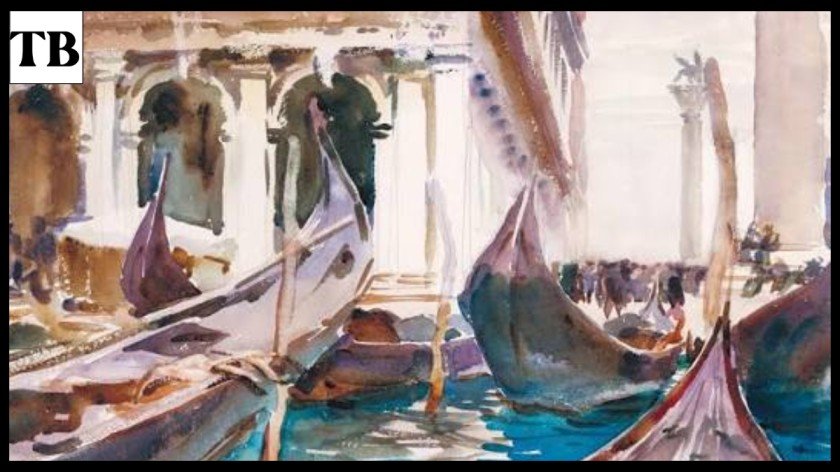
Although portrait painting made him famous, John Singer Sargent also created beautiful watercolour paintings inspired by his travels, landscapes and everyday surroundings. His subjects included Venetian canals, Mediterranean scenery, gardens and historic buildings. These works show a more relaxed side of his artistic style and reveal his ability to capture light, colour and atmosphere with just a few confident brushstrokes.
Some of the key features of his watercolour technique include:
- Light and shadow: He used contrasts to give scenes depth and atmosphere.
- Transparent washes: He layered watercolour to create soft colours and natural effects.
- Confident brushwork: He used quick, expressive strokes to capture important details.
- Landscape composition: He arranged shapes and colours to guide the viewer’s attention.
- Travel inspiration: He painted places and scenes that caught his eye during his journeys.
These techniques made his watercolours distinctive and continue to interest artists today. Beginners can learn from his ability to simplify complex subjects without losing their character. His paintings also demonstrate that careful observation, thoughtful composition and effective use of light can make even an ordinary scene visually engaging.
Wife, Personal Life and Cause of Death
Readers searching for information about the artist’s wife should know that he never married. He devoted much of his life to his professional career, travelling frequently and maintaining friendships with artists, patrons and cultural figures. His private life has attracted historical interest, but claims about his personal relationships should be assessed carefully. Reliable biographies distinguish documented information from speculation.
His career took him across Europe and the United States, where he developed relationships with important collectors and institutions. Portrait commissions demanded considerable attention and time, while travel offered opportunities to explore new landscapes and cultures. Despite his success, he continued to work in different formats and subjects rather than limiting himself entirely to commissioned portraits. This flexibility helped maintain his artistic reputation over several decades.
He died in London on 15 April 1925, aged 69. Although readers frequently search for a specific cause of death, a definitive medical explanation should not be presented without reliable historical evidence. His death marked the end of a remarkable career that connected traditional European painting with the changing artistic culture of the modern era. His paintings continue to be exhibited and studied internationally.
Best Books and Artistic Legacy
Books about the artist offer readers an opportunity to explore his life, working methods and most important paintings in greater detail. Illustrated biographies are useful for understanding his education, international career and relationships with influential patrons. Exhibition catalogues often provide detailed discussions of individual paintings, preparatory studies and watercolours. These resources can help beginners and experienced art enthusiasts develop a more informed appreciation of his work.
When choosing a book, consider your particular interest. A general biography provides an overview of his life and career, while a specialist publication may concentrate on portraiture, watercolour techniques or individual masterpieces. Books containing high-quality reproductions are especially helpful because they allow readers to examine brushwork, colour relationships and compositional details. Museum publications can also provide historical context that is difficult to obtain from images alone.
His artistic legacy extends well beyond society portraits. His watercolours demonstrate his interest in travel and natural light, while his mural projects reveal his engagement with historical and decorative art. His First World War painting Gassed explores the human consequences of conflict and offers a very different perspective from his fashionable portraits. Together, these works reveal an artist whose abilities reached across subjects, techniques and cultural settings.
Also Read. James McNeill Whistler Biography Famous Paintings and Art Style
(FAQs)
What Is John Singer Sargent’s Most Famous Painting?
Portrait of Madame X (1884) is one of his most famous works, admired for its dramatic composition and elegant style.
Why Is John Singer Sargent So Famous?
He became famous for his expressive portraits, confident brushwork and ability to capture the personality of his subjects.
Did John Singer Sargent Ever Marry?
No, he never married and devoted much of his life to his artistic career, travelling and painting.
Where Are Most of John Singer Sargent’s Paintings?
His works are held in major collections, including the Metropolitan Museum of Art, the Museum of Fine Arts in Boston and Tate in London.
When Did John Singer Sargent Die?
He died in London on 15 April 1925, aged 69, leaving a lasting legacy in portraiture and watercolour painting.
Conclusion
John Singer Sargent remains one of the most admired portrait artists in history. His famous paintings, including Madame X and Lady Agnew of Lochnaw, show his remarkable ability to capture people’s personalities and emotions. Beyond portraits, he created beautiful watercolours, landscapes and murals that reveal his creativity and love of art. His confident brushwork and use of light continue to inspire artists and art lovers today. Although he never married, he built a lasting legacy through his work. Exploring his life and paintings helps us understand why his art continues to attract attention and admiration around the world.