


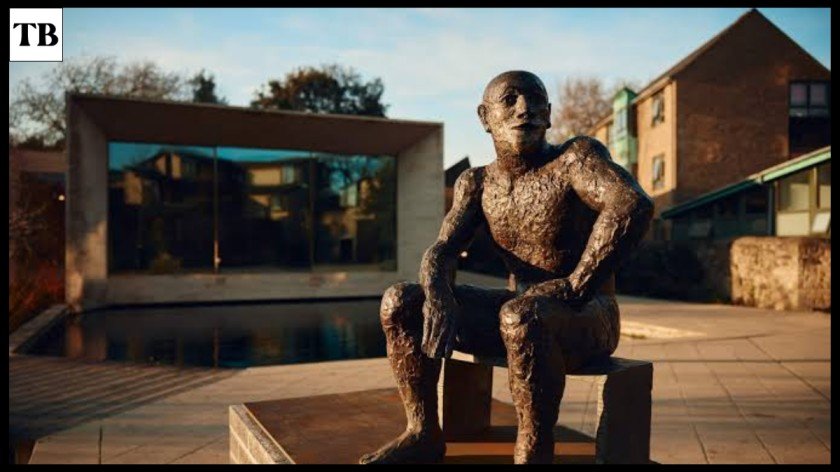
Elisabeth Frink was one of Britain’s most distinctive sculptors of the 20th century, known for powerful figures of people and animals. Her artwork often feels raw and emotional, with rough surfaces that give her sculptures a strong sense of character. Birds, horses, dogs and male figures appeared throughout her career, while works such as Walking Madonna and Risen Christ revealed a deeper interest in faith and human experience. Frink also worked as a printmaker and received major recognition during her lifetime. Today, her sculptures continue to attract museum visitors, collectors and art lovers interested in modern British sculpture and her remarkable artistic legacy.
Elisabeth Frink Artwork, Style and Artistic Development
The distinctive quality of her artwork comes from the tension between recognisable subjects and heavily worked surfaces. She rarely aimed for photographic realism. Instead, she reduced figures and animals to powerful shapes that could communicate movement or emotion without excessive detail. Her sculptures may have rough textures, simplified limbs and dramatic outlines. These choices give the work a physical presence that changes as the viewer walks around it. Light also plays an important role because uneven surfaces create shadows that alter the appearance of the sculpture throughout the day.
Her early education helped establish this independent approach. She studied at Guildford School of Art from 1947 to 1949 and then attended Chelsea School of Art from 1949 to 1953. During this period, she became interested in sculpture that could express psychological states rather than simply reproduce the human body. Her early professional career developed quickly, and her first solo exhibition took place in the mid-1950s. This gave her an opportunity to establish herself at a time when British artists were questioning older artistic traditions.
A major feature of her method was the use of plaster over a wire armature. Instead of modelling every surface into a perfectly smooth finish, she could build up, cut away and distress the plaster. She then worked the surface further before the final bronze casting. This process helped create the broken, weathered appearance associated with many of her sculptures. The technique was not simply decorative. It allowed her to make surfaces that suggested age, struggle, damage and movement, giving the finished bronze an unusually tactile character.
Elisabeth Frink Bird, Horse, Warrior and Animal Figures
Birds became one of the most memorable subjects in her career. Her bird sculptures do not usually present nature as peaceful or decorative. Many have heavy bodies, angular shapes and an alert or threatening quality. Wartime experiences influenced her imagination, and birds could become symbols of fear, aggression, flight and survival. Her fascination with birds also connected with the countryside of her childhood. The result was a group of works that feel both recognisably animal and strangely human.
The horse became another important subject. Her horse sculptures often avoid the idealised image of the graceful animal found in traditional equestrian art. Instead, she emphasised weight, power and physical presence. The animal can appear tense, muscular or restrained, creating a sense of energy even when the figure stands still. This interest eventually contributed to major works such as War Horse, where the horse becomes connected with conflict, memory and the complicated relationship between human beings and animals.
Her Warrior figures and male subjects show another side of her artistic thinking. She repeatedly explored masculinity, aggression, authority and vulnerability through simplified male bodies. The figures may look strong, but they rarely appear completely secure. Some seem damaged, isolated or psychologically troubled. This mixture of power and fragility makes her human sculpture more complex than a simple celebration of strength. Her animals and people therefore share an important quality: both can appear alert, exposed and capable of violence.
Elisabeth Frink Famous Works and Public Sculptures
Several major sculptures demonstrate the range of her career. Bird is among the best-known examples of her early interest in animals and anxiety. Goggled Head explores the human figure through a striking combination of distortion and concealment. Running Man focuses on movement while retaining her characteristic rough surface. These works show how she could create a strong emotional impression without relying on complicated compositions or excessive detail.
Her public commissions expanded this language into architectural and civic settings. The Eagle Lectern for Coventry Cathedral became one of her significant early commissions. The eagle has a monumental presence, while its rough surface connects it to the sculptural language that had already become associated with her work. She later produced important religious sculpture, including Risen Christ for Liverpool Cathedral. These commissions demonstrate that her art could work successfully in spaces where scale, symbolism and public meaning were particularly important.
Walking Madonna, created in 1981, is especially significant because it represents a powerful female figure within a career often associated with male subjects. Commissioned for Salisbury Cathedral, the bronze presents the Madonna as a tall, austere and determined figure. She does not appear sentimental or fragile. Instead, the sculpture communicates dignity through a simplified body and controlled movement. Other important works include Man on a Horse, War Horse and the Kennedy Memorial commission. Together, these projects show how her work moved between galleries, churches, public spaces and private collections.
Elisabeth Frink Husband, Personal Life and Cause of Death
Questions about her personal life often accompany searches for her artwork. She married Alex Csaky, a sculptor and artist, in 1954, although the marriage later ended. She subsequently married Edward Pool, who became an important figure in her later life. Her personal relationships mattered to her biography, but they should not overshadow the independence of her artistic career. She built a reputation through sustained work, exhibitions and commissions rather than through her private life.
The question of the Elisabeth Frink cause of death is also frequently searched by readers researching her biography. She died in 1993 at the age of 62 after suffering from cancer. Her final years did not erase the importance of her earlier achievements. In fact, her career had already established her as one of the major British sculptors of her generation. She received significant honours during her lifetime, including a CBE, membership of the Royal Academy and a damehood.
The phrase Elisabeth Frink died can therefore be understood within a much wider story than the date of her death. She left behind a substantial body of sculpture, prints, drawings and public commissions. Her final major work, Risen Christ, was created for Liverpool Cathedral in 1993. The work has particular significance because of its religious subject and its place within the final stage of her career. Her death marked the end of her working life, but not the end of interest in her art.
Elisabeth Frink Sculptures for Sale and Collecting Her Work
Interest in Elisabeth Frink sculptures for sale comes from both established collectors and people discovering modern British sculpture for the first time. Her work can appear through major auction houses, specialist dealers, galleries and private sales. Prices vary greatly depending on the sculpture, edition, size, provenance, condition and rarity. Prints and works on paper can sometimes provide a more accessible entry point than important bronze sculptures, although individual prices still differ widely.
Anyone considering a purchase should look beyond the name of the artist. Provenance is particularly important because it helps establish the history of ownership and authenticity. Buyers should also check the edition information, casting details, dimensions and condition. For prints, details such as paper, signature, numbering and edition size can affect value. A reputable specialist should be able to provide clear documentation rather than relying only on broad claims about investment potential.
There are several practical points worth checking before buying:
- Confirm the title, date and medium of the work.
- Check whether the sculpture is an original, edition or later authorised cast.
- Request provenance and authentication documentation where available.
- Examine the condition and ask about restoration.
- Compare recent auction results for genuinely comparable works.
- Consider insurance, transport, storage and installation costs.
- Buy because the work has artistic value to you, not simply because you expect its price to rise.
The market can change, so a purchase should not be treated as a guaranteed financial investment. The strongest reason to collect her work is its artistic quality and historical importance. A sculpture can become a meaningful part of a collection because of its form, texture and emotional character, regardless of short-term market movements.
Why Her Work Still Matters in British Art
Her importance comes partly from the way she challenged expectations about what modern sculpture could communicate. She did not need elaborate narratives to make a figure appear psychologically charged. A single bird could suggest danger, while a standing man could suggest isolation or authority. Her rough surfaces became part of the meaning. They made the bronze feel less like a perfect object and more like something shaped by pressure, conflict and time.
She also expanded the possibilities available to a woman working as a major sculptor in Britain during the twentieth century. Sculpture had long carried associations with monumental public art and male artistic traditions. She entered that environment with a highly individual style and eventually received major commissions and national honours. Her success did not depend on making her work conventionally delicate or decorative. Instead, she established authority through scale, discipline and a clear visual identity.
The continuing appeal of her work can also be seen in museums, public collections, exhibitions and auction interest. Students can study her as an example of post-war British art. Sculptors can examine her treatment of plaster and bronze. Art historians can explore her approach to masculinity, animals, religion and violence. Collectors can study her editions and market history. General visitors can simply respond to the physical power of the sculptures. That wide range of interpretations helps explain why her work remains relevant.
- Also Read. Francis Bacon Life and Art
(FAQs)
What are Elisabeth Frink’s most famous sculptures?
Her famous works include Bird, Walking Madonna, Risen Christ, Eagle Lectern and War Horse. Her sculptures explore strength, fear, movement and vulnerability.
What are some interesting facts about Elisabeth Frink?
She was a leading post-war British sculptor who also produced prints and drawings. She studied at Guildford and Chelsea and later became a Royal Academician.
What was Elisabeth Frink’s artistic style?
Her style featured rough textures, simplified forms and expressive human and animal figures. She often built sculptures in plaster before creating bronze casts.
Who is the most famous British sculptor?
Henry Moore is often regarded as one of Britain’s most internationally famous sculptors. Barbara Hepworth and Frink are also highly influential figures in British sculpture.
Is Elisabeth Frink still alive?
No, she died in 1993 at the age of 62 after cancer. Her sculptures and prints continue to be exhibited, collected and studied.
Conclusion
Elisabeth Frink left behind a body of work that still feels powerful and surprisingly modern. Her sculptures of birds, horses, warriors and people were never simply about appearance. They often captured feelings of fear, strength, uncertainty and hope in a way that viewers could easily connect with. Works such as Bird, Walking Madonna, Risen Christ and War Horse show just how varied her career became. Her rough surfaces and expressive shapes gave each sculpture a distinctive personality. Although she died in 1993, her work continues to interest museums, collectors, students and art lovers, securing her place in the story of British sculpture.