


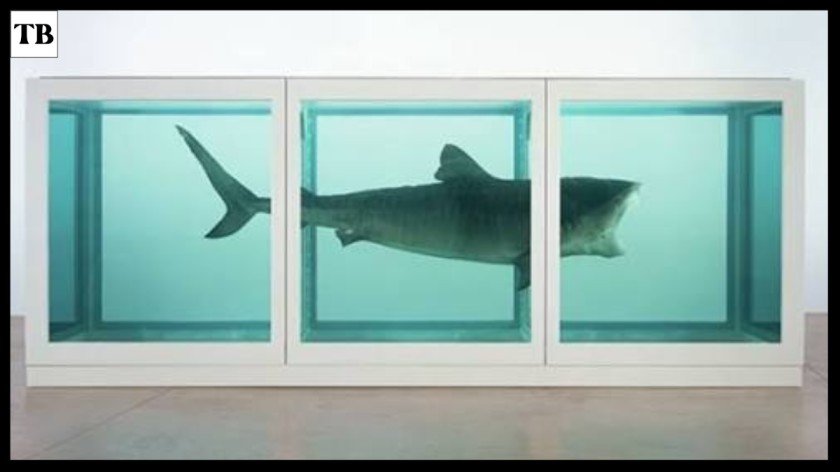
Damien Hirst is one of Britain’s most talked-about contemporary artists, known for creating work that can surprise, fascinate and sometimes even shock people. His art explores big ideas such as life, death, beauty, science, medicine and wealth in ways that feel both unusual and memorable. From a shark floating in formaldehyde to colourful Spot Paintings and a diamond-covered skull, his creations have attracted attention around the world. He rose to fame through the Young British Artists movement and built a successful international career. This article looks at his life, famous works, artistic style, controversies, market and lasting influence on modern British art.
Early Life and Rise to Fame
Born in Bristol in 1965 and raised in Leeds, Hirst developed an interest in art before studying Fine Art at Goldsmiths, University of London. His student years placed him among a generation of young artists who wanted to challenge traditional expectations. Rather than following established artistic formulas, they experimented with unusual materials, exhibition spaces and concepts.
In 1988, he organised the Freeze exhibition with fellow students. The event became closely associated with the emergence of the Young British Artists, a group of artists who gained considerable attention during the late twentieth century. Freeze demonstrated how young artists could organise exhibitions themselves and attract collectors, critics and institutions without depending entirely on established galleries.
His career developed rapidly during the 1990s. Death became one of his most recognisable subjects, but he also explored medicine, science, religion, consumer culture and beauty. Major exhibitions and the Turner Prize increased his public profile, while international interest helped establish him as an influential figure within contemporary British art.
The Shark and Famous Works
One of the most recognisable works from the career is The Physical Impossibility of Death in the Mind of Someone Living. Created in 1991, the installation features a tiger shark preserved in formaldehyde inside a large glass tank. The work creates a direct encounter with mortality because viewers see a real animal suspended between scientific preservation and the appearance of life.
Some of the most notable works and series include:
- The Physical Impossibility of Death in the Mind of Someone Living — the famous shark installation.
- For the Love of God — the diamond-covered human skull.
- Spot Paintings — colourful paintings arranged in systematic grids.
- Butterfly works — pieces exploring beauty, colour and mortality.
- Pharmaceutical Paintings — works inspired by medicines and modern healthcare.
The shark became particularly important because it challenged conventional ideas about sculpture. Rather than carving stone or modelling clay, the artist presented an existing animal through preservation and installation. Another famous work is For the Love of God, created in 2007. Other important bodies of work include butterfly pieces, Pharmaceutical Paintings and Spin Paintings, showing how the artist repeatedly explored beauty, death, science and material wealth.
Spot Paintings and Artistic Style
The Spot Paintings are among the most recognisable paintings associated with Hirst’s career. They feature coloured spots arranged in carefully controlled grids, often against white backgrounds. The Government Art Collection explains that the series developed during the 1980s and followed strict rules concerning spacing and colour.
The apparent simplicity of these paintings is an important part of their character. At first glance, viewers may see only repeated circles and bright colours, but the works depend on systems, balance and variation. The National Galleries of Scotland notes that Hirst said he personally painted only five Spot Paintings because he found the process boring, while assistants produced many others.
The scale of the series is also significant. Gagosian’s documentation of the complete Spot Paintings records more than 300 paintings created between 1986 and 2011. Some works are relatively small, while others contain thousands of individual spots. The series therefore demonstrates how one simple visual idea can generate a large and varied body of contemporary art.
Skull, Butterflies and Major Themes
The diamond skull remains one of the most discussed works from the artist’s career. For the Love of God uses the human skull as a direct symbol of mortality, while platinum and diamonds introduce ideas of luxury, wealth and status. The contrast makes the work visually attractive while keeping death at the centre of its subject.
Butterflies provide another example of the artist’s interest in beauty and impermanence. Their colourful wings can create an immediate impression of delicacy and elegance, yet their short natural lives connect them to mortality. This combination of attraction and discomfort appears throughout the wider body of work and encourages viewers to think about how beauty can exist alongside death.
Pharmaceutical works approach similar themes through medicine. Rows of pills create orderly and visually controlled arrangements, but the objects represent illness, treatment and dependence on modern healthcare. Science and religion also appear throughout the work, with preserved animals, medical imagery and human remains creating associations with laboratories, pharmacies and scientific collections.
Art Market, Sales and Financial Interest
Searches for works for sale can refer to paintings, sculptures, prints and limited editions. Prices vary according to the individual artwork, edition size, provenance, condition, authentication, date and selling venue. A major original work should therefore not be compared directly with a signed print or limited edition simply because both carry the same artist’s name.
The artist has also played a significant role in discussions about the commercial side of contemporary art. His 2008 Sotheby’s auction, Beautiful Inside My Head Forever, attracted international attention and demonstrated how an established contemporary artist could sell works directly through a major auction. His market activity has consequently become part of the wider story surrounding his career.
Searches for Damien Hirst net worth should be treated cautiously because private wealth is not independently confirmed through a complete public financial record. One widely circulated third-party estimate places his wealth at around $700 million, but this remains an unofficial estimate rather than a verified figure. Buyers should instead focus on provenance, authenticity, condition and seller reputation when researching potential purchases.
Public Reaction and Cultural Influence
The artist’s career has generated both admiration and criticism. Supporters often focus on his memorable concepts, strong visual identity and ability to bring difficult subjects such as death into popular discussions. Critics have questioned his commercial success, use of assistants, repetition and the relationship between spectacle and artistic value.
Online discussions demonstrate how varied public reactions can be. Reddit conversations about the shark, formaldehyde works, paintings and collecting include people who appreciate the conceptual ideas as well as people who question the prices or artistic methods. These discussions can provide insight into audience reactions, but individual comments should not be treated as equivalent to museum research or professional art scholarship.
His influence can also be seen in discussions about authorship and studio production. Contemporary art can involve assistants, fabricators, technicians and specialist craftspeople, and his practice made this process especially visible to the public. Whether viewers agree with the approach or not, the debate has encouraged wider consideration of how an artwork is produced and where responsibility for its creation lies.
Why His Work Still Attracts Attention
One reason the work remains widely discussed is the variety of subjects and materials used throughout the career. Viewers interested in painting can explore the Spot series, while others may prefer the shark, skull, butterflies, pharmaceutical imagery or installations. This range gives different audiences several entry points into contemporary art.
The work can also be understood at different levels. A viewer does not need specialist knowledge to recognise the dramatic presence of a shark in a tank or the visual contrast created by diamonds on a skull. At the same time, these objects can lead to more complicated questions about mortality, wealth, science, religion, beauty and consumer culture.
For students and new art enthusiasts, studying this career provides a useful introduction to conceptual art and modern British art. It demonstrates how contemporary artists can use found objects, scientific techniques, repetition and commercial production systems to communicate ideas. The continuing debates around the work also show how contemporary art can remain culturally relevant long after an exhibition has ended.
- Also Read. Tracey Emin Exhibition Dates Venues
(FAQs)
What is Damien Hirst’s most famous piece?
His famous works include The Physical Impossibility of Death in the Mind of Someone Living and For the Love of God, the diamond skull.
Why was Damien Hirst controversial?
His work sparked debate over dead animals, assistants, high prices, authorship and the boundaries of contemporary art.
What are Damien Hirst’s Spot Paintings?
The Spot Paintings feature colourful circles arranged in systematic grids and became one of his most recognisable series.
What is the Damien Hirst skull?
For the Love of God is a platinum human skull decorated with diamonds, exploring themes of death, luxury and wealth.
Can you buy Damien Hirst artwork?
Yes, paintings, prints, sculptures and editions can appear through galleries, dealers and auction houses, with prices varying by work.
Conclusion
Damien Hirst has left a strong mark on contemporary British art with works that are bold, unusual and often difficult to forget. From his famous shark and diamond skull to colourful Spot Paintings, his art encourages people to think about life, death, beauty, money and science in different ways. His career has also sparked lively debates about assistants, authorship and the business of art. Some people admire his ideas, while others remain critical of his approach. Either way, his work continues to attract attention around the world. Exploring his career offers an engaging introduction to contemporary art and its changing boundaries.