


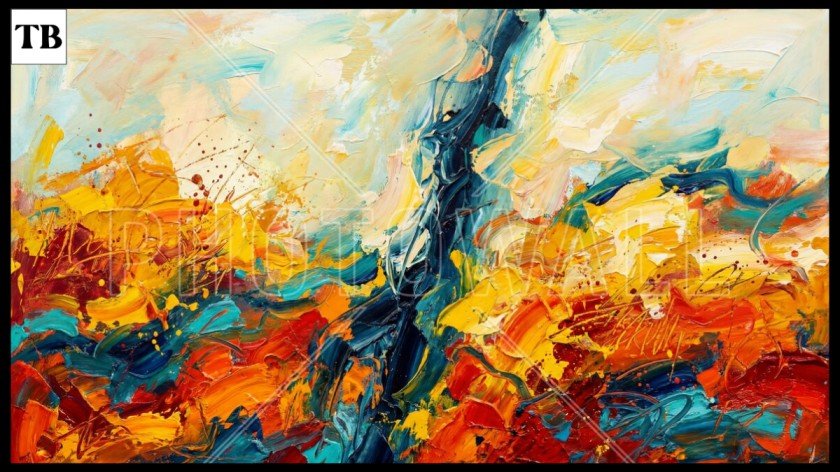
Have you ever looked at a painting and wondered what it means? That is part of the beauty of abstract art. Rather than copying real-life scenes, artists use colours, shapes, lines and textures to express their thoughts and feelings. Some paintings feel bright and full of energy, while others create a calm and peaceful mood. You do not need to know everything about art to enjoy it or find a piece you love. In this guide, we will explore famous artists, different styles, simple drawing ideas and helpful tips for choosing artwork that suits your home and personal taste.
What Is Abstract Art and What Makes It Different?
Abstract art is a style of visual expression that moves away from realistic representation. Artists use colours, shapes, lines and textures to communicate ideas instead of showing people or places exactly as they look. Some paintings simplify familiar objects, while others contain forms that are difficult to recognise. The focus often falls on how the visual elements work together to create a particular mood or effect.
One of the most interesting features is the freedom it gives viewers to interpret a painting. Bright colours might suggest happiness or energy, while darker shades may create a feeling of mystery or sadness. These meanings are not fixed, because people bring their own memories and experiences to what they see. A painting can therefore feel different to each person, even when everyone looks at the same work.
This approach also allows artists to experiment with balance, movement, contrast and space. A realistic landscape usually shows a recognisable place, but an abstract composition might express the feeling of being outdoors through colour and shape alone. Some paintings appear simple, while others contain many overlapping details. Both approaches can communicate powerful ideas without relying on a clear, realistic image.
The History and Development of Abstract Painting
Modern abstract painting began to develop during the late nineteenth and early twentieth centuries. Artists started moving away from traditional rules and exploring new ways to express their ideas. Photography made realistic images easier to capture, while changes in music, science and society encouraged fresh thinking. As a result, colour, shape and composition became important ways to communicate meaning.
Wassily Kandinsky helped establish this new direction by exploring the emotional power of colour and form. Piet Mondrian developed a more structured approach, using straight lines and blocks of colour to create balanced compositions. Kazimir Malevich experimented with simple geometric shapes, challenging the belief that paintings needed to show familiar objects. Each artist explored different possibilities and helped expand the boundaries of modern painting.
During the twentieth century, artists continued to experiment with new methods and materials. Jackson Pollock became famous for dripping and pouring paint across large canvases, while Mark Rothko created paintings featuring broad areas of colour. Later movements explored minimalism, mixed media and digital techniques. Today, artists continue to build on these ideas, combining traditional methods with new approaches to creativity.
Famous Abstract Artists and Their Most Important Paintings
Wassily Kandinsky is widely recognised for paintings that combine energetic lines, bright colours and overlapping shapes. His work Composition VII is a well-known example of his complex visual style. Kandinsky believed that colour and form could create emotional responses without showing recognisable subjects. His paintings encourage viewers to explore the relationship between movement, rhythm and imagination.
Piet Mondrian took a different approach by creating carefully organised compositions with straight black lines and blocks of primary colours. His painting Composition with Red, Blue and Yellow demonstrates how a limited number of elements can create a striking result. Jackson Pollock, meanwhile, developed an energetic technique involving dripped and splashed paint. His famous work No. 5, 1948 shows how layers of marks can create movement across a canvas.
Mark Rothko became known for large areas of colour with soft edges and subtle changes in tone. His paintings often encourage quiet reflection rather than quick interpretation. These artists demonstrate that creative expression can take many forms, from precise geometric arrangements to spontaneous brushwork. Studying their paintings can help beginners recognise different techniques and discover which styles they find most interesting.
Popular Styles, Colour and Creative Techniques
There are several styles to explore, and each uses visual elements in a different way. Geometric compositions rely on clear shapes and organised patterns, while expressive paintings often feature energetic brushstrokes. Colour-field works focus on large areas of colour, and minimalist compositions use only a few carefully chosen elements. Mixed-media pieces combine paint with materials such as paper, fabric or collage to create additional texture.
Colour, shape and line can change how a painting feels. Warm shades such as red, orange and yellow may suggest energy, while cooler blues and greens can create a calmer atmosphere. Repeated circles or lines can establish rhythm, whereas sharp angles may introduce tension. Artists use contrast, spacing and texture to guide the viewer’s attention and create a sense of balance throughout the composition.
When studying a painting, look at which areas catch your attention first and how the colours relate to one another. Notice whether the composition feels crowded or open, calm or energetic. You can also compare smooth areas with rough textures and repeated shapes with unexpected details. These simple observations make it easier to understand how a painting works without needing to know exactly what the artist intended.
Drawing Ideas, Buying Artwork and Decorating Your Home
Creating your own painting can be a fun way to explore creativity, even if you have never taken an art class. You can begin with paper, pencils, coloured markers or a few basic paints. Choose an idea inspired by music, nature or a favourite memory, then use colours and shapes to express your feelings. Experiment with different arrangements instead of worrying about making everything perfect.
Beginners can try these simple activities to develop their skills:
- Colour experiment: Combine three colours in different shapes and patterns.
- Music drawing: Create lines and marks that respond to the rhythm of a song.
- Geometric design: Arrange circles, squares and triangles in different sizes.
- Layered collage: Combine coloured paper, pencil marks and paint to create texture.
- Continuous-line drawing: Create a composition using flowing lines and a limited colour palette.
If you want to buy artwork, consider your budget, available wall space and preferred colours before making a decision. Original paintings, limited-edition prints and affordable decorative pieces offer different options. Check the dimensions, materials and framing requirements carefully, especially when shopping online. Choose a piece that suits your home and personal taste rather than buying something simply because it is fashionable.
- Also Read. Elisabeth Frink Life Art
(FAQs)
What defines a painting as abstract?
Abstract painting uses colours, shapes, lines and textures rather than realistic images. It often expresses emotions, ideas or movement through creative visual elements.
What is the hidden golden rule in abstract art?
Balance is an important principle, helping colours, shapes and empty spaces work together. However, artists can break traditional rules to create original compositions.
What is the most famous abstract painting?
Famous examples include Kandinsky’s Composition VII, Mondrian’s Composition with Red, Blue and Yellow, and Pollock’s No. 5, 1948.
What are the trends in abstract art for 2026?
Current trends include bold colours, textured surfaces, expressive brushwork and digital experimentation. Some artists also explore environmental themes and mixed media.
Can beginners create abstract drawings at home?
Yes, beginners can use pencils, paints or markers to experiment with shapes, lines and colours. Regular practice helps develop creativity and a personal style.
Conclusion
Abstract art is a wonderful way to express feelings, share ideas and see the world from a different perspective. Through colours, shapes, textures and patterns, artists can create meaningful work without painting things exactly as they look in real life. Famous artists such as Wassily Kandinsky and Jackson Pollock have inspired generations to think creatively and explore new ideas. You do not need to be an expert to enjoy or create your own paintings. Whether you want to try drawing, brighten up your home or discover famous artworks, start by exploring different styles and choosing pieces that speak to you.