


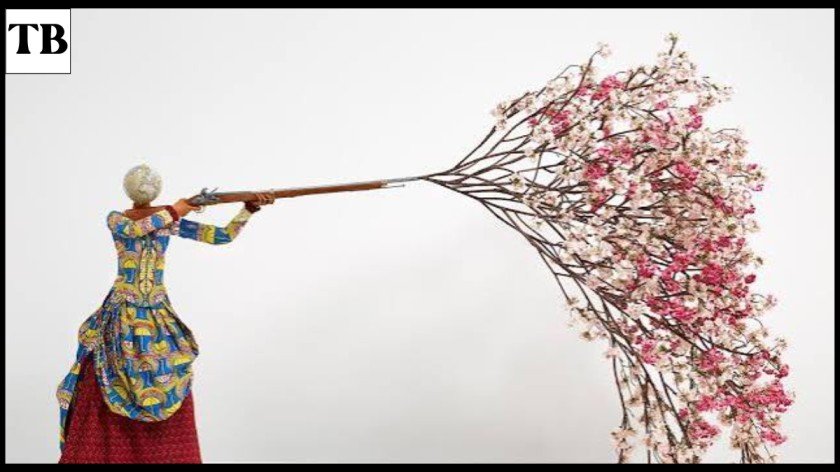
Yinka Shonibare is a British-Nigerian artist who has become well known for creating colourful artworks with powerful messages. He often uses brightly patterned Dutch wax-print fabric to explore identity, culture, colonial history and the way people see the world. His work includes sculptures, photography, films and large installations that bring historical ideas into a modern setting. Famous pieces such as The Swing (after Fragonard) and Nelson’s Ship in a Bottle show how he uses familiar images to make people think differently about the past. Whether you are an art lover or just discovering his work, his creative approach offers a fresh and fascinating perspective on history and culture.
Biography, Early Life and Education
Shonibare was born in London in 1962. His family moved to Lagos, Nigeria, when he was three years old. Growing up between Britain and Nigeria influenced his understanding of culture, identity and belonging. He later returned to England to study at Byam Shaw School of Art before completing a Master of Fine Arts degree at Goldsmiths, University of London, in 1991.
His career developed during the 1990s as he explored the connections between art, politics and history. He gained wider recognition for combining European historical references with colourful African-inspired textiles. He received a Turner Prize nomination in 2004, became a Royal Academician in 2013 and received a CBE in 2019 for his contribution to art. These achievements reflect his influence on contemporary British culture.
Artistic Style, Dutch Wax Fabric and Cultural Identity
One of the most recognisable features of his work is Dutch wax-print fabric. These colourful textiles have a complex history involving international trade, European manufacturing and Indonesian batik influences. Shonibare uses their patterns to explore cultural exchange, colonialism and identity. His work often places patterned fabric in historical European settings, creating a striking contrast between traditional costumes and vivid designs.
He also uses headless figures to shift attention away from individual identity and towards clothing, power and social status. His artistic practice includes sculpture, photography, film and public installations. These different forms allow him to communicate complex ideas through accessible visual images. Viewers may first notice the colours and patterns, then discover deeper questions about wealth, race and history.
Famous Artworks and Their Meanings
The Swing (after Fragonard) (2001) reimagines an eighteenth-century painting by French artist Jean-Honoré Fragonard. Shonibare uses patterned fabric and a headless figure to challenge traditional ideas about wealth and privilege. Another important work, Scramble for Africa (2003), explores European powers dividing African territories during the colonial period. It encourages viewers to consider the lasting effects of imperialism and the unequal relationships between countries.
Some of his most famous artworks include:
- The Swing (after Fragonard) (2001): Reinterprets a famous painting to explore wealth, privilege and cultural identity.
- Scramble for Africa (2003): Examines European colonial expansion and the division of African territories.
- Nelson’s Ship in a Bottle (2010): Features a model of HMS Victory with colourful patterned sails, inviting reflection on British naval history and empire.
- The British Library (2014): Celebrates migration and diversity through books bearing the names of people with migration histories.
- Diary of a Victorian Dandy (1998): Uses staged photographs to question traditional ideas about race, class and social power.
These works combine striking visual designs with important historical and social themes. Through familiar images and colourful materials, Shonibare encourages visitors to question the stories societies tell about their past.
2026 Exhibitions in London and Beyond
The National Gallery in London is scheduled to present Yinka Shonibare and Thomas Gainsborough: A Conversation from 15 October 2026 to 7 February 2027. The exhibition pairs Gainsborough’s Mr and Mrs Andrews, painted around 1750, with Shonibare’s Mr and Mrs Andrews without their Heads (1998). The gallery lists admission as free. Visitors should check the official for the latest visitor information.
The two works offer contrasting views of wealth, land and social status. Gainsborough’s painting presents a wealthy couple in the English countryside, while Shonibare reinterprets the scene with patterned textiles and headless figures. Another 2026 exhibition, Patterns of Power, ran at The Arc in Winchester from 14 February to 3 June. Yinka Shonibare: Sanctuary at the Rose Art Museum in the United States is scheduled to run from 11 February 2026 to 3 January 2027.
Disability, Books, Net Worth and Artistic Legacy
Shonibare developed transverse myelitis in early adulthood. This neurological condition affects the spinal cord and can cause movement difficulties. It affected his mobility, and he uses a wheelchair. He has continued to develop an international artistic career, creating sculptures, photographs, films and installations. Readers interested in his work can explore museum catalogues, artist interviews and books about contemporary British art to learn more about his techniques and ideas.
Many people search for information about his net worth, but there is no reliable, independently verified public figure confirming his personal wealth. Artwork prices do not reveal an artist’s total income or assets, so online estimates should be treated cautiously. His artistic legacy rests on his ability to combine striking visual designs with challenging questions about colonialism, identity and migration. By bringing British and Nigerian influences together, he encourages audiences to reconsider familiar historical stories.
(FAQs)
What condition does Yinka Shonibare have?
He developed transverse myelitis, a neurological condition that affects the spinal cord, in early adulthood. It affected his mobility.
Why is Yinka Shonibare in a wheelchair?
He uses a wheelchair because transverse myelitis affected his mobility. He continues to create internationally recognised contemporary artworks.
Where does Yinka Shonibare live now?
He has longstanding connections to Britain and Nigeria. His exact current residence has not been reliably confirmed publicly.
What is Yinka Shonibare famous for?
He is known for contemporary art exploring colonial history, identity, race and migration. Colourful Dutch wax-print fabric is a signature feature of his work.
What are his most famous artworks?
Notable works include The Swing (after Fragonard), Scramble for Africa and Nelson’s Ship in a Bottle. These works explore history, power and cultural identity.
Conclusion
Yinka Shonibare has made a lasting impression on the art world through his colourful sculptures, thought-provoking installations and creative use of patterned fabric. His work brings history to life while exploring important themes such as identity, colonialism, migration and belonging. Famous pieces like The Swing (after Fragonard) and Nelson’s Ship in a Bottle encourage people to look beyond their appearance and think about the stories they tell. His exhibitions also give visitors a chance to experience these ideas in person. Whether you are an art student or simply curious about modern art, exploring his work offers a fresh perspective on Britain’s past and its connection to the wider world.