


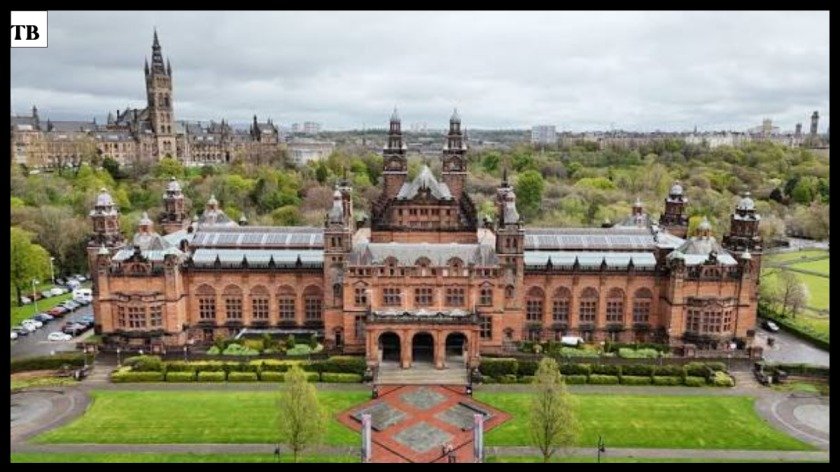
Kelvingrove Art Gallery and Museum is one of the leading museums in Glasgow, which presents an exquisite combination of artworks and historical exhibits in the field of science, history, architecture, art and natural history. The Kelvingrove Museum is located next to Kelvingrove Park and is represented by an elegant red sandstone building housing 22 galleries of amazing collections. Here you will be able to enjoy the Christ of St John of the Cross by Salvador Dalí, see the Scottish paintings, learn about dinosaurs and natural history, as well as view popular items like the Spitfire and Sir Roger the elephant.
What Is Kelvingrove Art Gallery and Museum?
The Kelvingrove Art Gallery and Museum is a major public museum in Glasgow, Scotland. It stands on Argyle Street, close to Kelvingrove Park. The building opened in 1901 during Glasgow’s International Exhibition. It later became the city’s main art gallery and museum. More than a century later, it remains one of Glasgow’s best-known attractions.
The building is an attraction in its own right. Its red-sandstone exterior gives it a distinctive Victorian appearance. Inside, the large Centre Hall creates an impressive first impression. The museum also has a historic organ with 2,889 pipes. Regular organ recitals add music to the visitor experience.
The museum has 22 galleries with thousands of objects and artworks. Its collections cover many different subjects. Visitors can explore Scottish art, European paintings, natural history and Ancient Egypt. There are also displays about arms and armour, design and prehistoric life.
This variety makes the museum suitable for different types of visitors. Art lovers can spend time studying paintings. Families can explore animals and prehistoric displays. History enthusiasts can discover objects from different periods and cultures.
The museum also has strong links with Glasgow’s artistic heritage. The Mackintosh and Glasgow Style collection is particularly important. It introduces visitors to the work of Charles Rennie Mackintosh and the wider design movement associated with Glasgow.
Its location is another advantage. Visitors can combine a museum trip with a walk around Kelvingrove Park. This is useful for families who want some outdoor time. It also makes the attraction easy to include in a wider Glasgow itinerary.
Price, Opening Hours and Parking
General admission to the museum is free. This is one of its biggest advantages. Visitors do not need to pay a standard entrance fee to explore the main collections. Donations are welcome and help support Glasgow’s museums.
Some special exhibitions and events may have separate charges. Visitors should check the latest information before travelling. Free admission also makes the museum useful for families. There is no large entrance cost for a group.
Current opening hours are generally 10am to 5pm from Monday to Thursday. Saturday also has the same hours. The museum opens from 11am to 5pm on Friday and Sunday.
Opening times can change because of events or other arrangements. It is therefore sensible to check the latest information before your journey. This is especially important if you are travelling from outside Glasgow.
The museum also hosts regular organ recitals. These can add something different to a visit. Planning your trip around a recital can be a good option for music lovers.
Parking is available near the museum. However, visitors should be aware of current restoration work. Some parking spaces may be affected by the works.
The museum provides spaces for Blue Badge holders. Electric vehicle charging facilities are also available. Parking availability can change, so drivers should check current arrangements before travelling.
Public transport can be another convenient choice. Visitors staying in central Glasgow may find it easier to travel without a car. This also removes the need to find a parking space.
Dalí and the Famous Art Collections
Salvador Dalí’s Christ of St John of the Cross is one of the museum’s most famous artworks. The painting was completed in 1951. It shows Christ on the cross from a striking viewpoint above a landscape.
The unusual perspective makes the artwork easy to recognise. The figure appears suspended above the world below. The composition creates a strong sense of depth and drama.
The painting is also interesting because it differs from the surrealist images most people associate with Dalí. It has a serious religious subject. Its controlled composition shows another side of the artist’s work.
In 2026, the painting received an enhanced new presentation. The new display provides more space and information about the artwork. Visitors can learn more about Dalí and the story behind the painting.
A film is also part of the new presentation. It uses Dalí’s own words to explore the artwork. This gives visitors more context than simply looking at the painting.
The art collection goes far beyond Dalí. Visitors can explore Scottish Colourists, The Glasgow Boys and European art. There are also collections covering French and Dutch art.
The Mackintosh and Glasgow Style gallery is another important area. It highlights Glasgow’s contribution to design and architecture. Visitors interested in art and design should allow extra time for this section.
A useful tip is to avoid rushing through the galleries. Choose a few paintings that interest you. Look at their colours, composition and subject before reading the information panel.
This approach can make the visit more enjoyable. You do not need to understand advanced art history. Simple observations can help you appreciate the work.
Dinosaurs and Natural History Displays
The natural-history collection is especially popular with families. The Creatures of the Past gallery explores prehistoric life through fossils, skeletons and other displays.
Visitors can learn about animals that lived millions of years ago. The exhibits also explain how scientists study ancient life. This makes the gallery both educational and entertaining.
Children can see the size of prehistoric creatures for themselves. They can also compare fossils and skeletons with animals they know today. This can make science more interesting.
Some of the main highlights include:
- Ceratosaur skeleton – shows the size and structure of a prehistoric dinosaur.
- Flying Pterosaur – an example of an ancient flying reptile.
- Giant dinosaur footprint – helps visitors understand the size of prehistoric animals.
- Prehistoric fossils – provide evidence about ancient life and environments.
- Sir Roger the elephant – one of the museum’s best-known natural-history displays.
- Animal specimens – show the variety of life in the natural world.
- Creatures of the Past gallery – a popular choice for families and dinosaur fans.
The prehistoric displays are useful for school-age children. They can support lessons about fossils, evolution and extinction. Seeing real specimens can make these subjects easier to understand.
Parents can also turn the visit into a simple learning activity. Ask children to choose their favourite prehistoric creature. They could also try to find the largest animal in the gallery.
The natural-history collection is not limited to dinosaurs. Visitors can discover many animals and other specimens. This gives the collection a wider scientific purpose.
The museum shows how collections can support public education. Objects can tell us about animals, environments and changes in the natural world.
The natural-history galleries also provide a welcome break from paintings. This is useful for families with different interests. Children can enjoy prehistoric displays while adults explore nearby art galleries.
What to See at Kelvingrove Museum
There is a lot to see, so first-time visitors should avoid trying to explore everything. A better approach is to choose several highlights before entering.
The Centre Hall is a good place to start. Its impressive architecture creates a strong first impression. The historic organ is another major feature.
Next, art lovers should see Dalí’s Christ of St John of the Cross. It is one of the museum’s most important paintings.
Other highlights include:
- Salvador Dalí’s famous painting
- The historic organ
- The Spitfire
- Sir Roger the elephant
- Scottish Colourist paintings
- Mackintosh and Glasgow Style
- Ancient Egyptian objects
- Arms and armour
- Dinosaur and prehistoric displays
- European paintings
The Spitfire is particularly interesting for visitors interested in aviation and wartime history. Its presence adds a different subject to the museum experience.
Sir Roger the elephant is another memorable display. Its size makes it especially popular with children. It is also an example of how natural-history objects can become important museum icons.
The Ancient Egypt collection provides a different experience. Visitors can explore objects connected with an ancient civilisation. This makes it a good choice for history enthusiasts.
Arms and armour are also worth exploring. The objects show how weapons and protective equipment changed over time. They also demonstrate the skill involved in historical metalwork.
Visitors with an interest in design should make time for the Mackintosh collection. Glasgow has an important place in the history of modern design. The displays help explain that connection.
If you only have one hour, focus on the Centre Hall, Dalí and one other collection. Two or three hours will give you more time to explore.
Do not worry if you miss some galleries. The museum is large enough to require more than one visit. Free admission makes returning another day an easy option.
Photos, Visitor Tips and Is It Worth Visiting?
The museum is an excellent location for photography. The red-sandstone exterior provides a distinctive Glasgow background. The Centre Hall is also visually impressive.
The historic organ and architectural details can create memorable photographs. Visitors should always follow the current photography rules in individual galleries.
It is best to avoid using flash where it is not permitted. Some artworks may have additional photography restrictions. Checking the signs in each gallery is the safest approach.
Photography should not become the main focus of the visit. A photograph can record a memory, but seeing an artwork in person offers much more.
Allow around two to three hours for a comfortable first visit. This gives you enough time to explore several galleries without rushing.
Families may need longer. Children often want to spend more time with dinosaurs and animals. Taking short breaks can also make the visit easier.
Comfortable shoes are useful because the building is large. You may walk more than expected while moving between galleries.
The museum is also undergoing restoration work. Conservation projects are helping protect the historic building for future generations. Some areas may be affected while the work continues.
Visitors should check current information before travelling. This is especially important if you are interested in a particular gallery or parking.
There are several strong reasons to visit:
- Free general admission
- Famous artworks
- Dinosaur and natural-history displays
- Scottish art and design
- Historic architecture
- Family-friendly collections
- Convenient location beside Kelvingrove Park
The main disadvantage is the size of the museum. First-time visitors may feel overwhelmed by the number of galleries.
The easiest solution is to create a short list of priorities. Choose three or four highlights and explore them properly.
Overall, this is one of the best cultural attractions in Glasgow. It offers excellent value and a wide range of experiences under one roof.
Frequently Asked Questions
Is Kelvingrove Museum free?
Yes, general admission is free, making it a budget-friendly attraction for visitors to Glasgow.
Does Kelvingrove Museum have dinosaurs?
Yes, the museum has prehistoric displays, including dinosaur-related specimens and a giant dinosaur footprint.
What is the most famous artwork at Kelvingrove?
Salvador Dalí’s Christ of St John of the Cross is one of the museum’s most famous artworks.
How long does it take to visit Kelvingrove Museum?
Allow around two to three hours to explore the main galleries comfortably without rushing.
Is parking available at Kelvingrove Museum?
Yes, parking is available, although spaces can be limited because of ongoing restoration work.
Conclusion
The Kelvingrove Art Gallery and Museum is one of Glasgow’s best sights due to the combination of art, history, science, architecture, and natural history found there. Among other interesting things to see in this museum, visitors can observe Salvador Dali’s Christ of St John of the Cross, dinosaur exhibitions, Scottish artworks, and objects like the Spitfire or Sir Roger the elephant. The entrance fee is free, which makes the museum very attractive for tourists, families, and art fans. If you consider visiting the museum, it would be good to take into account its opening times and select several galleries.