


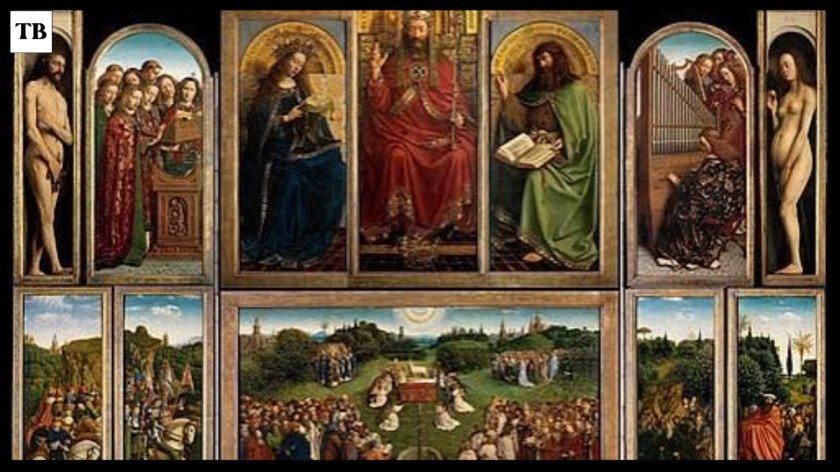
European culture was revolutionized through the changes that happened in artistic representation during the Renaissance era. Renaissance art emerged in Italy before it spread across all of Europe, and its focus was on reviving the old traditions of Greek and Roman civilizations through observation, scientific research and humanism. The Renaissance artists learned realistic human anatomy, linear perspective, balanced compositions, and methods of dealing with light and colors. Religious themes continued to be relevant, but other themes such as portrait, mythology, and nature were equally relevant during this time. Leonardo da Vinci, Michelangelo, Raphael, Botticelli and Titian became prominent artists of this time.
What Is Renaissance Art and When Did It Begin?
The term describes a broad period of artistic development that emerged in Italy before spreading to other parts of Europe. The word “Renaissance” means “rebirth”, referring largely to renewed European interest in ancient Greek and Roman culture, literature, philosophy and visual traditions. It was not a sudden revolution but a gradual transformation that developed from existing medieval traditions. Artists became increasingly interested in realistic bodies, convincing environments, individual expression and the observation of nature. At the same time, churches remained major patrons, so religious stories continued to dominate many important commissions. The result was a fascinating combination of traditional subjects and innovative visual techniques.
The Early Renaissance became particularly important in Florence during the 15th century. Wealthy merchants, banking families, churches and civic organisations commissioned paintings, sculptures and architectural projects. Artists such as Masaccio, Donatello and Brunelleschi contributed to important developments in painting, sculpture and architecture. Florence’s economic strength and intellectual culture created favourable conditions for artistic experimentation. Other cities, including Rome, Venice and Milan, later became major centres. Northern Europe developed its own interpretation, with artists placing particular emphasis on detailed observation, oil painting and symbolism.
The High Renaissance emerged around the late 15th and early 16th centuries. Leonardo da Vinci, Michelangelo and Raphael became its best-known representatives, although the period included many other important creators. Their achievements demonstrated that painting and sculpture could combine technical skill with intellectual investigation. By the later 16th century, artists began moving towards Mannerism and other new approaches. Consequently, historians generally treat the Renaissance as a long cultural process rather than a movement with a precise beginning and ending date.
7 Characteristics of Renaissance Art
The 7 characteristics of Renaissance art provide a practical framework for understanding the movement. The first is realism and naturalism. Artists carefully observed people, animals, landscapes and objects to make their representations more convincing. The second is linear perspective, which created the illusion of depth by organising lines towards a vanishing point. The third is anatomical study. Painters and sculptors investigated the human body to understand muscles, bones, proportions and movement. The fourth is classical influence, with Greek and Roman sculpture, architecture, mythology and philosophy becoming important sources of inspiration.
The fifth characteristic is humanism, which encouraged greater interest in individual identity, human emotion, education and intellectual achievement. The sixth is the sophisticated use of light and shadow. Chiaroscuro helped artists create volume through contrasts between light and dark, while Leonardo developed sfumato to create soft transitions between tones. The seventh is balanced composition. Artists carefully arranged figures, buildings and landscapes to establish visual harmony. These characteristics were not strict rules, however. Different artists interpreted them according to their own interests, training and regional traditions.
Other features are also important when studying renaissance art characteristics. Observation of nature became increasingly sophisticated, while portraiture gave individuals new opportunities to present their appearance and status. Mythological scenes allowed artists to explore ancient stories and idealised beauty. Religious works remained extremely important but were often presented with greater emotional realism. These developments demonstrate why the period cannot be reduced to one particular visual style. Its artists shared broad intellectual interests while developing distinctive methods. Understanding these characteristics is therefore more useful than simply memorising a list of famous paintings.
Famous Renaissance Artists and Their Greatest Works
Leonardo da Vinci is one of the most famous figures of the Renaissance, combining artistic creativity with scientific observation. His interests included anatomy, engineering, mathematics and nature. His Mona Lisa is admired for its subtle expression and atmospheric effects, while The Last Supper demonstrates sophisticated composition, perspective and storytelling. Michelangelo became famous for his powerful sculptures, paintings and architectural projects. His marble David shows exceptional knowledge of human anatomy, while the Sistine Chapel ceiling demonstrates his ability to create monumental and expressive figures.
Raphael became known for graceful figures and balanced compositions, particularly in The School of Athens.
- Leonardo da Vinci – Mona Lisa and The Last Supper
- Michelangelo – David and the Sistine Chapel ceiling
- Raphael – The School of Athens and Sistine Madonna
- Sandro Botticelli – The Birth of Venus and Primavera
- Titian – Venus of Urbino and Assumption of the Virgin
- Donatello – David and Gattamelata
- Masaccio – The Holy Trinity and The Tribute Money
- Albrecht Dürer – Self-Portrait and Melencolia I
These artists demonstrate the diversity of the Renaissance. Their works explored realism, anatomy, perspective, mythology, religion, portraiture and colour in different ways. Studying their masterpieces together makes it easier to understand how the movement developed across different cities and regions.
Renaissance Art Examples, Drawing and Techniques
Major renaissance art examples demonstrate the movement’s different approaches to storytelling, realism and beauty. Leonardo’s Mona Lisa is an important example of portraiture and atmospheric modelling. The Last Supper demonstrates perspective and dramatic interaction between figures. Michelangelo’s David represents the importance of anatomy and classical sculpture. His Sistine Chapel ceiling demonstrates the possibilities of monumental fresco painting. Raphael’s The School of Athens illustrates perspective and balanced composition, while Botticelli’s The Birth of Venus demonstrates the importance of mythology and graceful line.
Renaissance art drawing was an essential part of the creative process. Artists produced sketches to study hands, faces, bodies, clothing, movement and composition before beginning major works. Leonardo’s anatomical drawings reveal how closely observation was connected to his artistic practice. Michelangelo also created numerous preparatory studies. Some drawings were quick experiments, while others were highly developed works. Drawing allowed artists to solve visual problems before committing to expensive materials such as marble, pigments or large panels.
Painting techniques were equally important. Fresco allowed artists to create monumental wall paintings using pigments applied to wet plaster. Tempera was widely used during earlier stages of the period. Oil painting became increasingly significant, particularly in Northern Europe, because it allowed artists to create translucent layers and subtle colour transitions. Chiaroscuro created volume through light and darkness, while sfumato softened boundaries between forms. Linear perspective helped establish spatial depth. These techniques demonstrate that masterpieces were built through careful planning, technical experimentation and extensive observation.
Why Renaissance Art Was Important and Its Lasting Influence
The movement was important because it changed the relationship between visual creativity and intellectual knowledge. Artists studied mathematics to improve perspective, anatomy to understand the human body and nature to make landscapes and objects more convincing. This interdisciplinary approach became one of the defining achievements of the period. Leonardo’s notebooks are an especially clear example because they combine drawings and written observations about subjects ranging from anatomy to mechanical devices. Art became increasingly connected with investigation, education and experimentation.
Patronage was another important factor. Wealthy families, merchants, popes, churches and civic authorities commissioned works for religious, political and personal purposes. A painting or building could demonstrate wealth, education, religious devotion or political influence. Artists therefore worked within a complicated network of patrons and audiences. Understanding this context can change how a modern viewer interprets a masterpiece. A painting was rarely created simply because an artist wanted to paint. It usually had a particular purpose, location and audience.
The influence of the period continues today. Its approaches to anatomy, perspective, composition and lighting remain visible in photography, film, illustration, advertising and digital design. Classical architectural features continue to appear in public buildings, museums and private homes. Studying the period also offers practical benefits. It improves visual literacy, encourages careful observation and provides insight into European history. For artists, it offers lessons in proportion, anatomy and composition. For museum visitors, it provides a framework for understanding why particular works became historically important.
Renaissance Art Books, Museum Study and How to Appreciate the Art
A good renaissance art book can make the subject easier to understand by combining high-quality reproductions with historical and technical information. Beginners should look for books that explain major artists, important dates, materials, techniques and patronage. After gaining a broad understanding, readers can explore specialist studies of Leonardo, Michelangelo, Raphael, Botticelli or Titian. Books comparing Italian and Northern European developments can also be particularly valuable because they show that the movement was not identical across the continent.
Museums offer another excellent opportunity to understand Renaissance masterpieces. An original work can reveal details that may disappear in a digital image, including scale, texture, brushwork, surface condition and subtle colour variations. Instead of trying to see everything quickly, choose a few works and examine them carefully. Start by observing the whole composition. Then look at faces, hands, clothing, architecture and background details. Consider how the artist directs your attention through lines, light, colour and positioning.
A simple analysis method can make museum visits much more rewarding. First, describe what you see without immediately interpreting it. Second, identify the main focal point and examine how the composition leads your eye towards it. Third, look at technique, including perspective, colour, shading and anatomy. Fourth, consider symbols and historical context. Finally, discover who commissioned the work, where it was originally displayed and who would have viewed it. This process encourages active observation rather than passive viewing. It also helps explain why an artwork was created and what it meant to its original audience.
Frequently Asked Questions
What Defines Renaissance Art?
It is known for realism, perspective, human anatomy, classical influence and humanist ideas.
Who Were the Four Main Renaissance Artists?
Leonardo da Vinci, Michelangelo, Raphael and Titian are among the most influential Renaissance artists.
What Are Some Famous Renaissance Paintings?
Mona Lisa, The Last Supper, The School of Athens and The Birth of Venus are famous examples.
What Are the Four Main Features of Renaissance Art?
Realism, linear perspective, classical influence and humanism are four key features.
Why Is Renaissance Art Important Today?
Its techniques continue to influence modern painting, architecture, photography, film and design.
Conclusion
The art of Renaissance has been regarded as one of the most important eras of European culture due to realism, use of perspective, human anatomy, classicism, and humanism in art. Such masters of art as Leonardo da Vinci, Michelangelo, Raphael and Titian have produced some of the greatest masterpieces which are still defining how painting, sculpture, and narration through images should be done. This era also brought together art and science, architecture, religion and discoveries. Learning about the techniques used in this era will allow students, artists and museum-goers understand how masterpieces were made and why they are important.